Fishing License in Portugal: Which Route Is the Wise Choice for Your Trip?
Fishing License in Portugal: Which Route Is the Wise Choice for Your Trip?
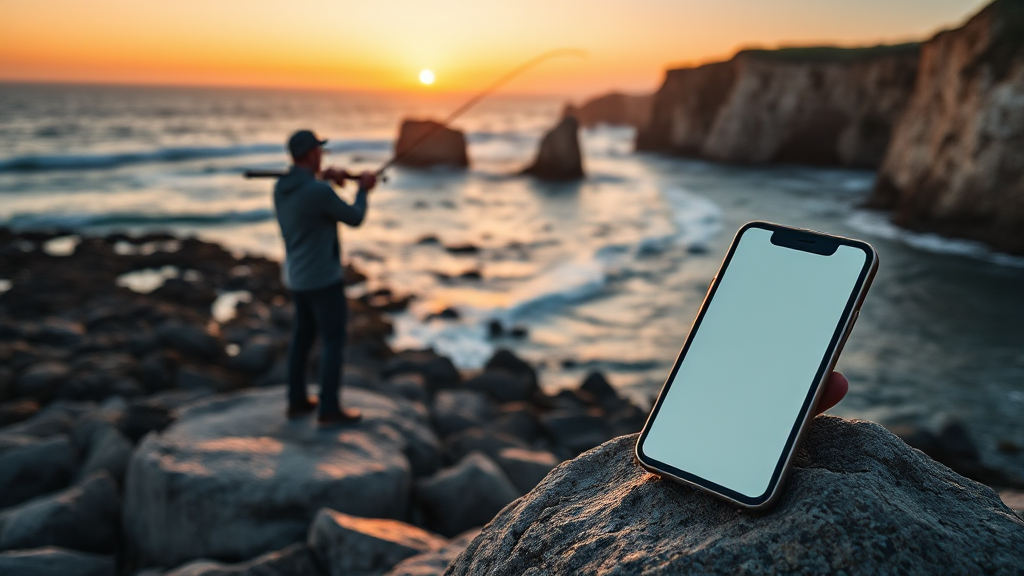
Standing on a Portuguese cliff at sunrise, rod in hand, you face a decision that has nothing to do with bait or tides: how do you get your fishing license before your first cast? There is more than one route, and each one trades convenience against cost and effort in a different way. Some anglers want the cheapest possible path and do not mind paperwork. Others want to spend three minutes on a phone and get back to planning their trip. This guide compares the realistic options side by side, then maps each type of angler to the route that actually fits.
Before the comparison, one clarification matters. In mainland Portugal, recreational sea fishing is regulated by DGRM, the government body responsible for marine resources. If you plan to fish from the shore, a boat, or a kayak in the sea, you generally need a licence. The question is not whether to get one, but which application route makes sense for your situation. That is the fork in the road, and it is worth choosing deliberately rather than by default.
Option One: The Official Government Portal Route
The traditional path runs through the official government portal. You register, navigate the forms, and pay the relevant fee directly. On paper, this is the most direct route, and for residents who already have the necessary credentials and are comfortable with Portuguese-language interfaces, it can work perfectly well.
The trade-offs are real, though. The portal experience varies. Some users find the registration flow straightforward; others hit friction with account creation, document requirements, or payment steps that do not accept every card. If you are a visitor arriving next week, a stalled form is not a minor annoyance. It is a threat to your fishing days.
This route suits the patient, the local, and the angler who enjoys handling bureaucracy on their own terms. It does not suit the traveller who lands on Friday and wants to fish on Saturday. Cost-wise, it is usually the cheapest in direct fees, but the hidden cost is time and uncertainty.
Option Two: Assisted Online Application Services
The second route is an assisted online service. Instead of wrestling with a government portal, you use a dedicated application service that handles the process for you. The most relevant example for mainland Portugal is portugal fishing licensing through easyfishingpermit, which is built specifically around the DGRM recreational sea fishing licence.
Here is how this route differs in practice. The application takes roughly three minutes. You do not need a NIF, the Portuguese tax number that trips up many visitors. You do not need to create an account on a government portal or interpret unfamiliar form fields. Payment is handled with a card, Apple Pay, or Google Pay, which removes the most common point of failure for foreign applicants.
The trade-off is a service fee on top of the licence cost. You are paying for speed, clarity, and reduced risk of a rejected or stalled application. For a short trip, that premium is often smaller than the value of one lost fishing morning. For a long stay, it may be worth comparing against the effort of doing it yourself.
This route suits visitors, first-timers, and anyone whose time on the coast is limited. It also suits anglers who simply prefer not to spend their holiday on administrative tasks. The service exists precisely because the official route, while legitimate, is not always convenient for people outside the system.
Option Three: Local Shops, Clubs, and Word of Mouth
The third route is informal: ask a local tackle shop, a fishing club, or a fellow angler to point you toward the right office or help you apply. In some coastal towns, this works beautifully. A shop owner who knows the local office can save you a lot of guesswork, and the personal touch is hard to beat.
The trade-offs here are reliability and timing. Word of mouth depends on who you happen to meet and whether they know the current rules. Advice that was accurate two seasons ago may be outdated now. Local help also tends to be available only during business hours and only in person, which is exactly when you would rather be fishing.
This route suits repeat visitors with local connections and flexible schedules. It does not suit anyone on a tight itinerary or arriving outside normal hours. Treat it as a supplement to a proper application, not a replacement for one.
What Actually Changes Between the Routes
Strip away the surface differences and the routes vary along four dimensions: time, effort, cost, and certainty. Time is how long the application takes. Effort is how much you have to understand and manage. Cost is the total outlay, including fees. Certainty is how confident you can be that the licence will be issued correctly and on time.
The government portal scores well on cost and, for some users, on certainty, but it demands the most effort and the least predictable time. The assisted service scores best on time and certainty, at a modest cost premium. Local help scores well on friendliness but poorly on predictability, because it depends on other people and their availability.
There is no single winner. There is only the route that matches your constraints. A retired resident with months to spare and a willingness to learn the portal may prefer option one. A family flying in for ten days should probably not gamble their fishing time on an unfamiliar form. That is the whole point of framing this as a wise choice rather than a universal recommendation.
Matching the Route to the Angler
Consider the short-trip tourist. You have booked accommodation near the Algarve coast, you have two or three fishing sessions planned, and your schedule is tight. Your priority is certainty. An assisted application that takes minutes and accepts Apple Pay or Google Pay removes almost all friction. The service fee is trivial next to the cost of the trip itself.
Consider the long-stay resident or expat. You have time, you may already have a NIF, and you plan to fish regularly for months. Here, the official portal route can be genuinely economical, and learning it once pays off across many renewals. If the portal frustrates you, the assisted route remains a reasonable fallback.
Consider the repeat visitor with local ties. You know the coast, you know a tackle shop, and you have flexibility. You might combine routes: use local knowledge for context and an online service for the actual application, so you get both the human insight and the administrative certainty.
Consider the first-time visitor who has never fished abroad. Everything is unfamiliar: the rules, the language, the payment systems. For this angler, the assisted route is not laziness; it is risk management. Getting the licence right the first time protects the entire trip.
Consider the budget-focused backpacker. If cost is the dominant constraint and you have time to spare, the official route may be worth the effort. Just build in buffer days, because a slow application can cost you a session.
Whatever route you choose, the underlying activity is the same: fishing in portugal is one of Europe’s great coastal experiences, from the Atlantic cliffs of the west to the warmer waters of the south. The licence is the key that unlocks it, and the route you take to get that key should reflect how you value your own time.
A Practical Decision Guide
If you want a simple rule, use this. Choose the official portal if you are a resident, you already hold the required credentials, and you have days of buffer before you fish. Choose an assisted online service if you are a visitor, you lack a NIF, you want card or mobile wallet payment, or your trip is short. Choose local help only as a supplement, never as your primary plan.
Then ask three questions. First, how many fishing days are at stake? The more days, the more certainty is worth paying for. Second, how comfortable are you with unfamiliar government forms? If the answer is not very, the assisted route is the wiser trade. Third, what is your realistic timeline? If you need a licence within days, convenience stops being a luxury and becomes a necessity.
One more consideration: rules and fees can change. Before you commit to any route, confirm the current requirements for the area and the type of fishing you plan to do. Sea fishing from shore, boat fishing, and spearfishing can carry different conditions. A good application service will guide you toward the correct licence category rather than a generic one.
The wise choice is not the cheapest route or the fastest route in the abstract. It is the route that fits your trip, your tolerance for admin, and your appetite for risk. Decide that first, and the application itself becomes a minor step on the way to the water.
Frequently Asked Questions
Do I need a licence to fish in the sea in mainland Portugal?
Yes, recreational sea fishing in mainland Portugal generally requires a licence issued under the DGRM framework. The exact category depends on how and where you fish, so confirm the current rules for your specific activity before you go.
Can I apply without a Portuguese tax number?
Many visitors do not have a NIF, and that is a common obstacle on the official portal. Assisted application services are designed to handle this situation, which is one of the main reasons travellers choose them over doing it themselves.
How long does an assisted application take?
A well-built service can complete the application in about three minutes, with payment by card, Apple Pay, or Google Pay. That speed is the core trade-off: you pay a service fee in exchange for time saved and reduced risk of errors.
Is the assisted route more expensive than the official one?
Usually yes, because a service fee is added to the licence cost. Whether that is worth it depends on your trip. For a short visit with limited fishing days, the certainty and speed often outweigh the extra cost.
Which route is best for a first-time visitor?
For most first-time visitors, an assisted online service is the safer choice. It removes language barriers, payment friction, and form confusion, letting you focus on planning your fishing rather than on administration.